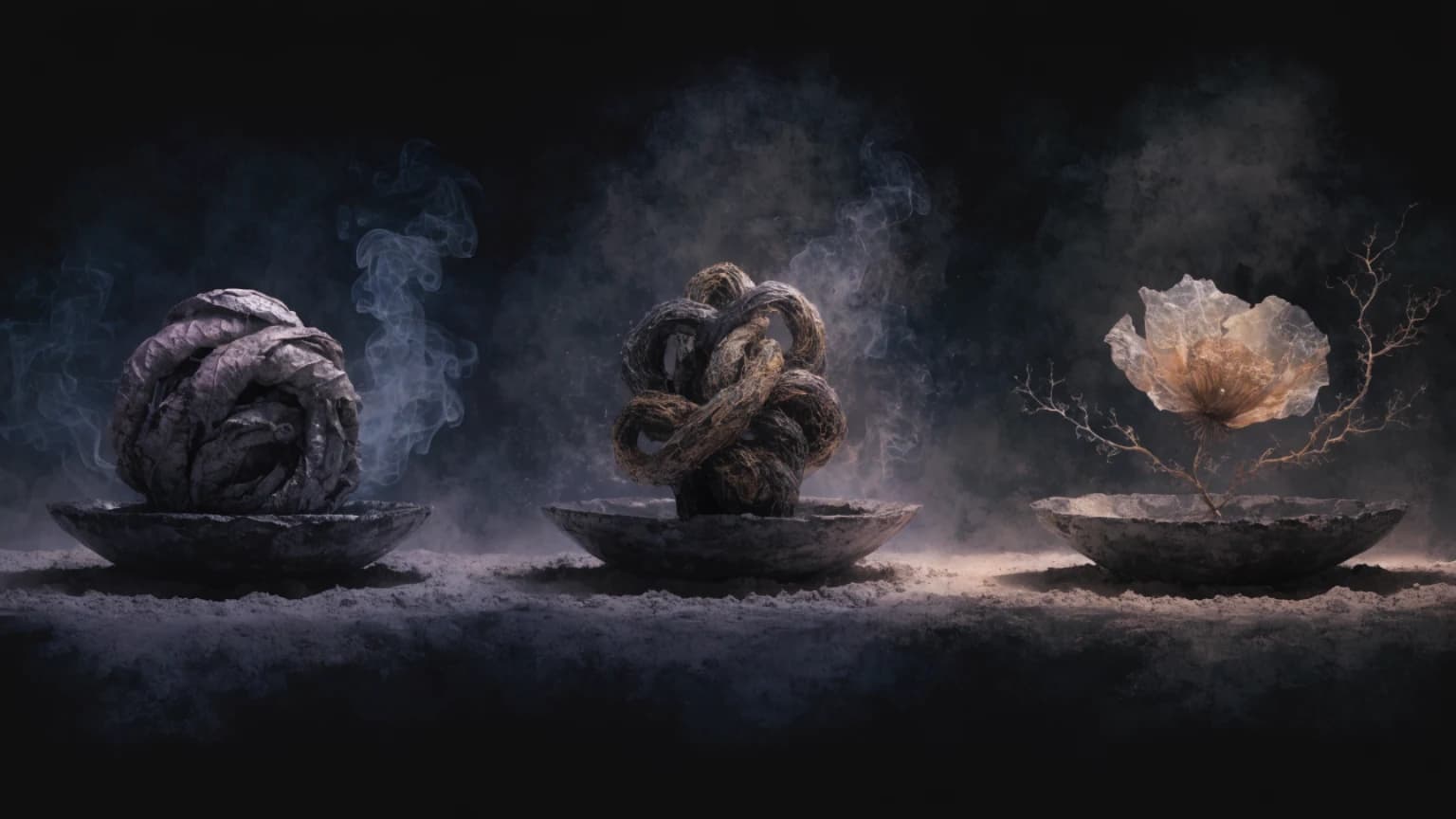
Three substances, three different traditions
L-theanine is an amino acid associated with tea, especially Camellia sinensis. Tea culture has a long history, but a bedtime cup of green tea is not equivalent to a purified L-theanine trial because ordinary tea can contain caffeine and many other compounds. Theanine is better understood as a possible relaxation aid than a direct sedative.
Valerian usually means the root or rhizome of Valeriana officinalis. Greek and Roman medical writers described it, and European herbal medicine has long used it for nervousness and sleep. California poppy means Eschscholzia californica, usually the dried above-ground parts. It is not the opium poppy, Papaver somniferum, and should not be described as a natural opioid.
| Ingredient | Best direct evidence | Current boundary |
|---|---|---|
| L-theanine | Recent systematic reviews find modest improvements in some subjective sleep measures | Few pure-ingredient insomnia trials, mixed populations, uncertain objective effects, and no proven optimal preparation |
| Valerian root | Some individual trials and subjective sleep-quality signals | Umbrella review found no demonstrated efficacy for insomnia; extracts vary substantially |
| California poppy herb | Traditional-use recognition plus one recent positive combination trial | The combination cannot isolate California poppy, and traditional registration is not clinical proof |
L-theanine: promising, not settled
A 2025 systematic review and meta-analysis included 19 articles and 897 participants. It found modest changes in several self-reported sleep outcomes, while noting that many studies used combinations or populations without diagnosed insomnia. A 2026 standalone-intervention review was more optimistic, but the review team included research affiliations with British American Tobacco. That does not erase the data. It increases the importance of independent replication and objective outcomes.
There is no credible evidence that a particular tea cultivar, fermentation style, or branded source is the best sleep aid. If the goal is to test L-theanine, a single-ingredient product makes the experiment easier to interpret than a multi-ingredient powder. A caffeinated tea can work against the bedtime goal even if it contains theanine.
Valerian: preparation matters, but does not rescue weak evidence
The 2024 umbrella review examined eight systematic reviews. It found no evidence that valerian effectively treats insomnia, although subjective sleep quality sometimes improved. Trials used different species, roots, extraction solvents, chemical markers, schedules, populations, and outcome measures. That heterogeneity is a real limitation, not permission to declare that one favored extract must work.
A consumer should at least look for the full botanical name, plant part, extract ratio or preparation, and an independently verified product. Whole root, aqueous extracts, and standardized extracts are not interchangeable. The NCCIH safety review says short-term use appears generally tolerated but long-term safety is unknown. Headache, stomach upset, mental dullness, excitability, and vivid dreams can occur, and combining valerian with alcohol or sedatives is a poor experiment.
California poppy: a new trial, still a combination
The European Medicines Agency permits a traditional-use conclusion for California poppy aerial parts used to aid sleep. In regulatory language, that means long-standing use makes the indication plausible even though clinical trials remain insufficient.
A 2026 randomized trial found a larger insomnia-score improvement with a fixed California-poppy-and-valerian extract than placebo in adults with insomnia associated with anxiety. It is useful new evidence. It cannot tell us whether California poppy worked, valerian worked, their combination mattered, or the result generalizes to tea, tincture, whole herb, another extract, or ordinary chronic insomnia.
Related herbs do not inherit each other's evidence
Chamomile, passionflower, lemon balm, lavender, and hops appear in traditional sleep formulas. Their histories and chemistry differ, and evidence for one does not validate a blend containing five. Combination products create a particular interpretive problem: even when a trial is positive, the active contributor and interaction remain uncertain. They also make adverse reactions and drug interactions harder to trace.
- For a clean experiment: change one ingredient at a time and keep the rest of the evening routine stable.
- For botanical quality: look for species, plant part, preparation, lot information, and independent contaminant and identity testing.
- For safety: check sedatives, alcohol, pregnancy, liver disease, and other medicines with a pharmacist or clinician.
- For persistent insomnia: treat herbs as optional adjuncts, not substitutes for evaluation or CBT-I.
The most defensible ranking is not “strongest herb.” It is an evidence ladder. L-theanine has a growing but still uncertain modern evidence base. Valerian has a large historical footprint and inconsistent clinical results. California poppy has traditional-use recognition and a promising new combination trial. All three need better independent, preparation-specific, objective sleep studies.